India and China Coordinate Rescue Amid Devastating Flash Floods on Nepal-Tibet Frontier

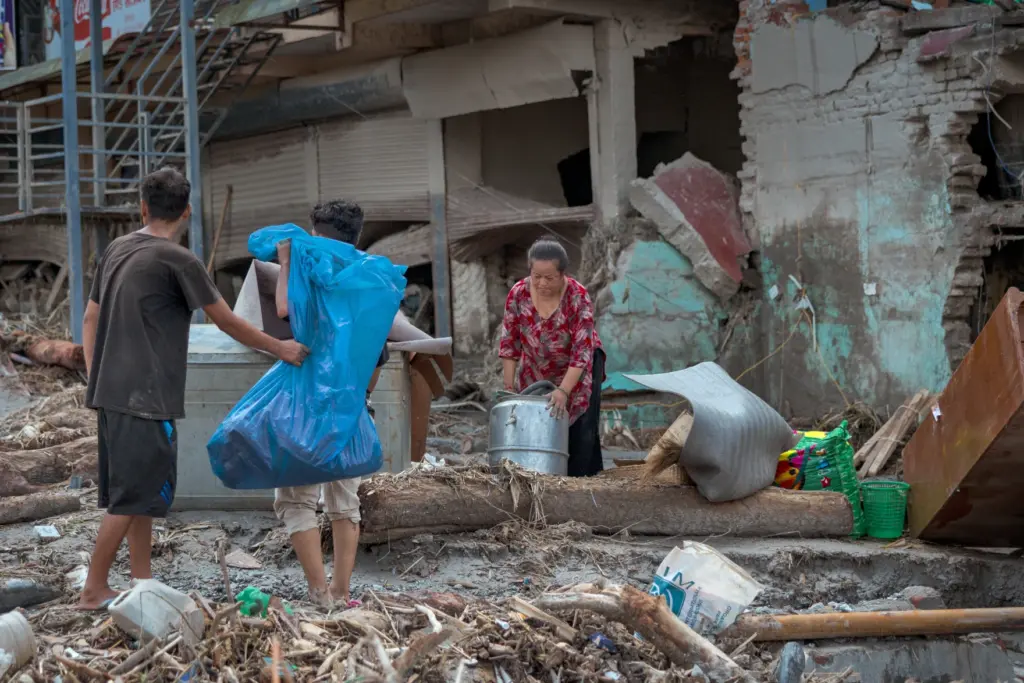
As the Himalayan region is known for its serene landscapes and spiritual significance, it has now once again become a stage for natural disaster and human response.
Cross-border flash floods, driven by heavy rain and glacial melt, have struck communities along the Nepal–Tibet frontier — India’s NDRF and state police, and China’s rescue personnel in the Tibet Autonomous Region, are conducting parallel relief operations — the UN’s OCHA is coordinating international NGO assistance for the recovery phase.
Since a few days, heavy rains and melting of glaciers have caused severe flash floods in the communities bordering Nepal and Tibet. Not only has it resulted in loss of life and damage to infrastructure, it has also thrown into sharp focus the intricate diplomatic and logistical coordination between India and China in dealing with cross-border crises. The event has highlighted the vulnerability of high-altitude ecosystems, as well as the importance of coordinated international response mechanisms in the region.
It has been a reminder of the vulnerability of high-altitude ecosystems and the need for coordinated international response mechanisms in the region.
The Immediate Impact and Rescue efforts.
The flash floods occurred with little warning, and swept away bridges, roads, and homes in remote border villages. The topography is extremely steep with narrow valleys, and rescue teams have been struggling access. Local authorities in Nepal have been reporting an increased death toll, with dozens of locals missing and feared dead. The fast rise in water levels, probably due to recent monsoon patterns and melting snow, flooded drainage systems and natural river beds that are not able to cope with such levels of water.
It has prompted Indian and Chinese governments to deploy their resources in the rescue and relief operations. In the Indian area, the National Disaster Response Force (NDRF) and state police forces have been rushed to the affected areas. They have been mainly looking for survivors, providing immediate medical aid and setting up temporary shelters for the displaced. The government has also dispatched supplies such as food, clean water and medical kits to the areas worst hit.
At the same time, the Chinese government in the Tibet Autonomous Region is carrying out their own rescue efforts. Chinese rescue personnel have been trying to seal off the northern side of the disaster zone, so as to ensure that aid can reach those trapped on both sides of the border, especially since the affected areas are so close to the border. Despite the current geopolitical tensions between these two countries, the cooperation between them reflects a pragmatic perspective on the issue of humanitarian crises in the Himalayas.
Cooperation between them reflects a pragmatic perspective on humanitarian crises in the Himalayas.
The geopolitical and environmental backdrop is a vital component of the story.
The geopolitical and environmental context is an essential part of the narrative.
The Nepal-Tibet border is more than just a territorial border; it is a strategic region. Any disaster in this region has repercussions for bilateral relations and regional stability. India and China have historically enjoyed a fine balance when interacting with each other and have often worked together on matters of mutual interest and also competed against each other in other matters. This is a first for the humanitarian community: the co-ordinated response to the floods shows that concerns for humanitarian action can overcome political differences, at least in the immediate aftermath of a disaster.
But so is the environment of this tragedy. The Himalyas are witnessing a rapid climate change which is making extreme weather events more difficult to be encountered. Glacial lakes are increasing in size; and rainfall is more erratic. Such alteration will have repercussions for the long-term stability of the region, not just in Nepal but in India and China, which depend on the Himalayan water towers for their agriculture, hydropower and drinking water.
The floods also show that the infrastructure is a problem in the area. The roads and bridges in the border areas are old, and are not designed to handle these severe weather conditions. These are important connections which are destroyed not only to impede rescue operations but also to leave communities vulnerable to future disasters. There is a critical need for resilient investment in infrastructure that is becoming more resilient to the changing climate.
The responsibility of the local communities and international aid.
Local communities are frequently the first responders for disaster responses, whereas national governments are important players. In the villages affected, villagers have been seen rescuing people trapped in the debris and dragging it out. Their understanding of the geographic environment and community relations has helped direct rescue teams and location of most impacted areas is their priceless help.
International aid groups are also pulling out their troops. The United Nations Office for the Coordination of Humanitarian Affairs (OCHA) has expressed concern over the situation and is working to coordinate the efforts of various NGOs and agencies. But the emphasis is on long-term assistance, such as reconstruction of homes and livelihoods, that will be vital to the recovery of the affected communities.
The best way to start is to read the answers.
The best approach is to read the answers first!
Immediate relief and recovery efforts will be followed by reconstruction. The next few weeks will be key in determining the extent of the destruction and in planning the rebuilding. Some of the major concerns are the rate of the provision of assistance, the effectiveness of the coordination between countries, and the future approaches to climate resilience in the region.
The disaster also highlights the issue of governance of border regions. Are the local communities ready when such an event occurs? Do they have a strong EWS system? The questions are sure to be the subject of policy discussions in New Delhi, Beijing and Kathmandu in the next few months.
In addition, the incident could have ramifications for future India-China ties. The co-operation in the floods is encouraging but now whether this will be carried over to other conflicts is yet to be seen.