Inside the Global Water Crisis: Why Hundreds of Millions Could Face Severe Shortages by 2030

Inside the Global Water Crisis
Why Hundreds of Millions Could Face Severe Shortages by 2030
Water, the most fundamental resource on earth, is becoming dangerously scarce for a growing proportion of humanity. A convergence of climate change, population growth, agricultural demand, and mismanagement is pushing dozens of nations toward water crises that experts warn could trigger humanitarian emergencies, economic collapse, and geopolitical conflict on a scale the world is not prepared to handle.
According to the most recent assessment by the United Nations World Water Programme, approximately 2.2 billion people worldwide currently lack access to safely managed drinking water. More than 3.6 billion people — nearly half the global population — live in areas that experience water scarcity for at least one month per year. By 2030, the UN projects that global demand for water will exceed available supply by 40 percent if current trends continue.
These are not abstract projections. They are trajectories already visible in communities across Africa, the Middle East, South Asia, and increasingly in parts of Europe and the Americas, where rivers that have flowed for centuries are running dry and underground water reserves built up over thousands of years are being depleted in decades.
“Rivers that have flowed for centuries are running dry and underground water reserves built up over thousands of years are being depleted in decades.”UN World Water Programme Assessment
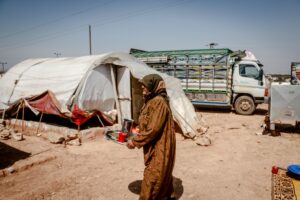
In the Middle East and North Africa, the situation is already critical. Countries like Yemen, Jordan, and Libya are among the most water-stressed nations on earth, with renewable freshwater resources per capita that are a tiny fraction of the global average. In Yemen, where years of devastating conflict have destroyed water infrastructure, an estimated 16 million people lack reliable access to clean water. Waterborne diseases are a leading cause of child mortality.
In sub-Saharan Africa, the picture is mixed but deeply concerning in the most vulnerable areas. Lake Chad, once one of Africa’s largest freshwater lakes and a vital resource for more than 30 million people across four countries, has shrunk by roughly 90 percent since the 1960s due to climate change and agricultural extraction. The communities that depended on it have experienced mass displacement, food insecurity, and social conflict.
South Asia faces a particularly complex water future. India, home to 1.4 billion people, is pumping groundwater faster than it can be replenished in its major agricultural regions. The city of Chennai, a metropolitan area of more than 10 million people, ran nearly completely out of water in 2019 — an event that was described at the time as an anomaly but that experts now see as a preview of coming challenges. Pakistan and Bangladesh face similar pressures, compounded by the melting of Himalayan glaciers that currently supply freshwater to hundreds of millions of people downstream.
Even in Europe, drought conditions have become more frequent and more severe. The summer of 2022 saw the worst drought on the continent in 500 years, with rivers including the Rhine, Loire, and Danube reaching critically low levels that disrupted shipping, reduced hydroelectric power generation, and threatened drinking water supplies in multiple countries. Conditions have not significantly improved since.
“The summer of 2022 saw the worst drought on the continent in 500 years.”Europe — Summer 2022
Understanding the water crisis requires understanding agriculture, which accounts for approximately 70 percent of all human freshwater consumption globally. Modern industrial farming, particularly the cultivation of water-intensive crops like rice, wheat, cotton, and almonds at large scale, places enormous demand on water systems that are already under stress.
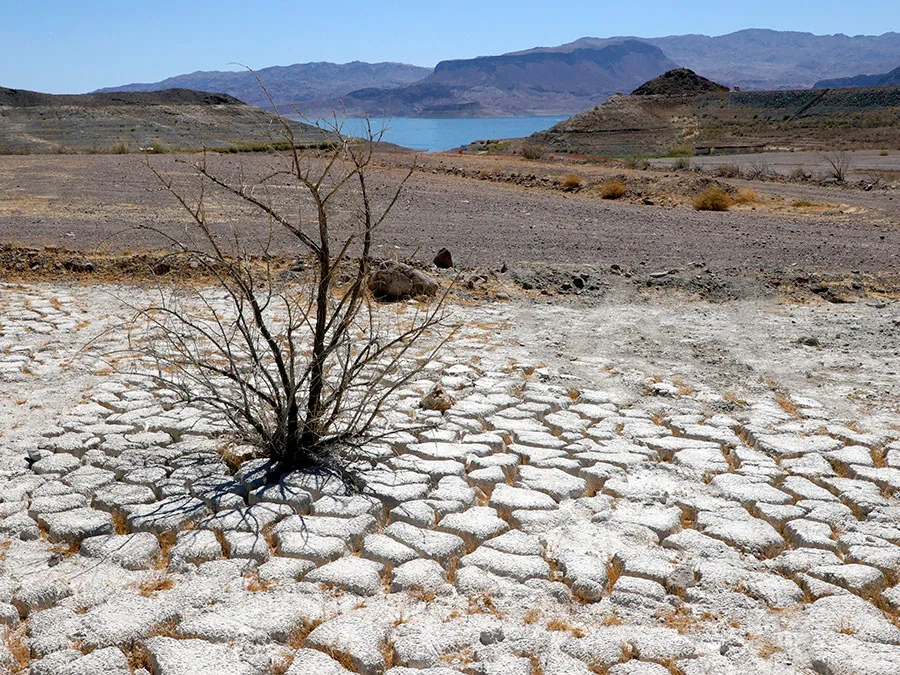
In the United States, the Colorado River — which supplies water to 40 million people and irrigates vast agricultural regions across seven states and parts of Mexico — has been in a prolonged crisis. Lake Mead and Lake Powell, the two largest reservoirs on the river, both dropped to record low levels in recent years, forcing unprecedented federal water restrictions and triggering political battles between states over allocation rights established under century-old agreements that did not anticipate the combination of population growth and climate change.
Water scarcity is not just a humanitarian and environmental problem — it is increasingly a source of international tension. The Nile River has been the subject of a prolonged and intensifying diplomatic conflict between Ethiopia, which has built the massive Grand Ethiopian Renaissance Dam, and downstream Egypt, which depends on the Nile for more than 90 percent of its freshwater supply.
Egypt has described the dam as an existential threat and has not ruled out military action to protect its water security. Ethiopia insists that the dam is essential for its development and energy needs. Despite years of mediation efforts by the African Union, the United States, and others, no binding agreement has been reached.
Similar tensions exist over river systems in Central Asia, Southeast Asia, and South America. As water becomes scarcer and more politically contested, the risk that disputes will escalate to conflict becomes more serious.
“Egypt has described the dam as an existential threat and has not ruled out military action to protect its water security.”The Nile Dispute — Egypt & Ethiopia
The encouraging reality is that the tools to address the water crisis are largely known and available. What is lacking is consistent political will and adequate financial investment to deploy them at scale.
Desalination technology, which converts seawater to freshwater, has improved dramatically in efficiency and cost over the past two decades. Israel has become a world leader in desalination and now produces more freshwater from the sea than it consumes from natural sources — a model that water experts say is increasingly viable for coastal nations. Singapore has built a comprehensive water recycling system that treats wastewater to drinking quality, making the city-state one of the most water-secure in the world despite having almost no natural water resources.
Agricultural reforms — including more efficient irrigation technology, the adoption of drought-resistant crop varieties, and the elimination of subsidies that incentivize water-intensive farming in arid regions — could dramatically reduce consumption. Conservation education and water pricing reforms that reflect the true value of water have shown results in cities from Cape Town to Los Angeles.
The global water crisis will not be solved by any single invention or policy. It will require an integrated response that combines technological innovation, agricultural reform, international cooperation, infrastructure investment, and genuine political commitment to treating water access as a fundamental human right rather than a commodity.
The United Nations and the World Bank have called for a dramatic increase in water-related aid and investment, particularly in the developing world. Several major international foundations have made water security a central funding priority. Grassroots movements in water-stressed communities around the world are developing and advocating for local solutions.
But time is a constraint that cannot be ignored. The infrastructure decisions, agricultural policies, and international agreements made in the next five to ten years will determine whether the water crisis of 2030 is a managed challenge or an unmanageable catastrophe.
For the hundreds of millions of people already living with water insecurity today, the urgency could not be more personal.