Mamata Banerjee Continued Political Fight Against BJP in West Bengal

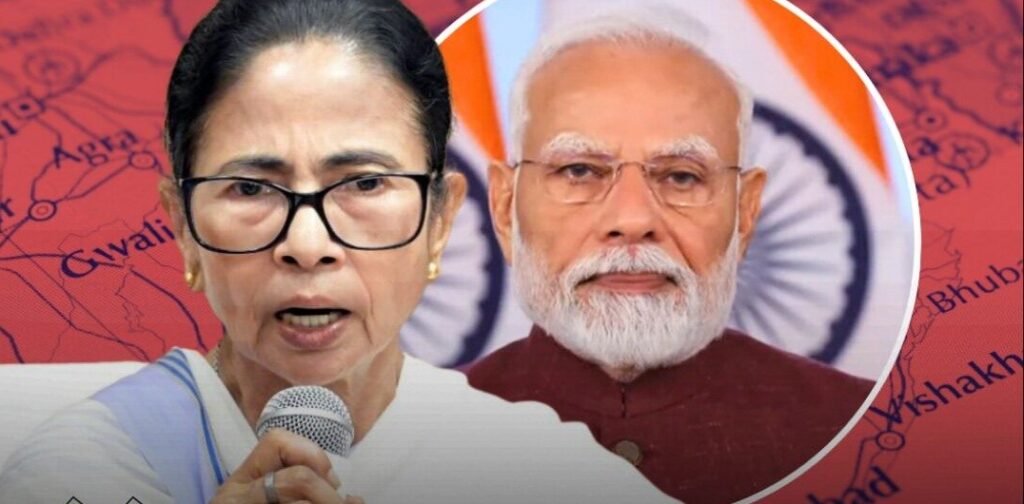
The Chief Minister Mamata Banerjee has turned the tables for the party politics in West Bengal by announcing her active involvement in the political arena, which goes against the age-old notion of retirement as expected for leaders of her age.
The announcement, which carries weight considering the state’s delicate political past, indicates that Trinamool Congress (TMC) chief is not going to cede her place for a younger leader, but is to fight on with the Bharatiya Janata Party (BJP). The move not only undermines the image of the political succession in Indian regional politics but also the personality cult that is prevalent in the TMC’s political organization.
The declaration has been made during a crucial period in West Bengal, which has been a flash point for national political parties for decades. For years, it has been a question whether Ms. Banerjee, the mainstay of the TMC mainstream political movement in the state for more than 10 years, would be able to sustain her hold for much longer. However, in numerous political systems, these leaders of her magnitude ultimately become ceremonial or mentoring roles, making way for new leaders to arise. But Ms. Banerjee’s remarks indicate that she does not think that the political environment is conducive to this shift. Her decision not to step down from the post is not only seen as her personal choice but also as a strategic move to challenge the “aggressive expansionist agenda” of BJP in the region.
A Political Brand Built on the Grassroots
One has to understand that the gravity of the announcement is due to the uniqueness of Ms. Banerjee’s political brand. Ms. Banerjee’s leadership is grounded in her personal relationship with people, especially the women and the underprivileged communities, as opposed to party machinery or ideology of others who rule the nations. Her political trajectory, from a junior Congress minister to the Chief Minister of West Bengal, was created through the prism of resistance and mobilisation from grassroots. She is continuing to work, reinforcing the notion that the TMC’s image is closely tied to hers. The BJP would face a major hurdle in the wake of its recent attempt to make a strong comeback with national concerns such as national security and economic development and at the same time establishing a leadership roster which would be independent of Ms Banerjee’s shadow.
Succession and Internal Democracy
This position has multiple implications. Firstly, it raises questions about the TMC’s internal democracy and succession planning. Political observers have always pointed out that the TMC is very centralised with major decisions being made by Ms Banerjee and her trusted group of people. No clear-cut successor publicly accepted by the population means that the future of power transition may be marked by internal conflict. Ms. Banerjee’s continued presence could be a way to ward off any possible power struggle that might develop in the party and ensure that her voice is not challenged for some time now. But, in the same way, the party’s fate is linked to that of her popularity and good health as a person and as a health official, thus exposing the party to outside shocks.
The Election Calculus
Secondly, it has immediate election consequences. West Bengal holds a pivotal place in the national political equation and the results of the election in the state can be pivotal in deciding the central government. The BJP has been showering funds on strengthening its organizational network in the state and looking to emulate its success elsewhere in the nation. Ms. Banerjee’s promise to remain anti-BJP may mean the next election will be a very personalized one, with the battle expected to be dominated by the BJP leadership fight between Ms. Banerjee and the national BJP leaders. This scenario can backfire on the TMC, as its base is very loyal to Ms Banerjee, but may also displease those who want a change of leadership or fear an ‘all-about-the-person’ politics.
Fear an “all-about-the-person” politics.
A Wider Pattern of Personalised Politics
Moreover, the statement is a representative of the increasing trend of political personalization in India. National political parties such as BJP and Indian National Congress have tried to institutionalize their structure, but regional parties’ reliance on charismatic leaders is still prevalent. Ms. Banerjee’s spirited move suggests the endurance of this model in such political climates across the nation. It also shows that she believes the present political scenario in West Bengal may not be conducive to a peaceful transition. Her current political battle with the central government, federalism concerns and the state’s economic problems will likely serve as bargaining chips in her political campaign.
What Comes Next
Now, it’s important to see how the TMC is going to carry out this strategy as West Bengal progresses. Will Ms. Banerjee be more hands-on in day-to-day governance and campaigning or will she pass on more of the work to her ministers, but still make the final decisions? The BJP, on the other hand, will have to see whether it can go over Ms. Banerjee’s head, or if it can go under her and focus on local issues and grievances. The next few months will