Modi Becoming India’s Longest-Serving Elected PM Sent a Signal to Washington

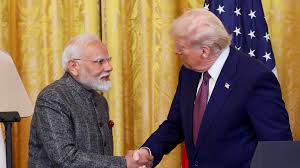
4,399 Days: Modi Breaks Nehru’s Record — and Washington Takes Note
Senator John Cornyn’s congratulatory message was more than diplomatic courtesy — it was a calibrated statement about where India sits in America’s strategic calculus in June 2026.
The Number That Made History
Indira Gandhi had a fractured tenure as prime minister for 14 years from 1966 to 1984 — but those years were non-consecutive and interrupted by her 1977–1979 defeat. Modi’s three consecutive electoral mandates — 2014, 2019, and 2024 — make this record both arithmetically clear and symbolically powerful.
The Cornyn Statement and Its Subtext
“Congratulations to Prime Minister @narendramodi on becoming India’s longest-serving elected Prime Minister — 4,399 days of leadership earned through the trust of 1.4 billion people across three democratic mandates. From lifting 250 million out of poverty to making India the world’s fastest-growing major economy, PM Modi’s tenure has been nothing short of transformational. The US-India partnership has never been stronger.”
— Senator John Cornyn (R-TX), Member, Senate Foreign Relations CommitteeCornyn is not a marginal figure. He is a senior Republican senator from the second-largest state in the Union, a member of the Senate Foreign Relations Committee, and a longtime advocate of deepening US-India defence and technology ties. His words carry institutional weight.
The phrase “never been stronger” deserves scrutiny. US-India relations have had turbulence in recent years — from trade tariff disputes during Trump’s first term to friction over India’s continued purchase of Russian energy and defence equipment post-Ukraine. The fact that a Trump-aligned senator is affirming the strength of the partnership suggests the current administration’s position has stabilised well beyond earlier ambiguity.
Beyond the Senator: The Diaspora Chorus
Arun Agarwal, Co-founder of the Indian American CEO Council and Chair of the Texas Economic Development Corporation, said the milestone offered an opportunity to reflect on India’s transformation during the past twelve years, writing: “The India of 2026 is not the India of 2014.”
“I offer my heartfelt congratulations to my friend Prime Minister Narendra Modi on becoming India’s longest-serving Prime Minister. Your steadfast leadership, enduring commitment to the progress, unity, and aspirations of 1.4 billion Indians, alongside your unwavering vision for a stronger Bharat has helped shape an era of transformation.”
— Mary Millben, Singer & Diplomat, White House GuestMillben also noted Modi’s diplomatic steadiness: “You have outlasted consecutive US Presidents, some with whom you had great relationship and others you have had great grace towards, yet you never wavered in exercising clear diplomacy that upheld the interests of the Indian people coupled with the health of our two countries.”
What the Numbers Behind the Celebration Actually Show
Modi’s tenure has been marked by macro-economic gains that are difficult to dispute. India became the world’s fifth-largest economy during his watch, overtaking the UK and France. The World Bank’s most recent South Asia Economic Update (April 2026) projects India’s GDP growth at 6.7% for fiscal year 2026–27, maintaining its position as the fastest-growing major economy globally.
On poverty reduction, the government’s own Multidimensional Poverty Index data, corroborated by NITI Aayog’s 2023–24 National Family Health Survey cross-analysis, suggests a significant decline in rural poverty since 2014 — though independent economists note the measurement methodology has been contested in academic circles.
The Unresolved Tensions
No 12-year record comes without complications, and honest analysis demands acknowledging them.
Unemployment among India’s youth remains stubbornly elevated. The Centre for Monitoring Indian Economy’s May 2026 data puts urban youth unemployment at 18.3%. Income inequality, measured by the Gini coefficient, has widened in the same period that aggregate wealth has grown — a pattern familiar from other high-growth emerging markets but politically combustible.
Press Freedom Index rankings from Reporters Without Borders placed India at 159th globally in 2025, a slide of more than 30 places since 2014. The government disputes the methodology and ideological framing of such rankings.
Urban Youth Unemployment: 18.3% as of May 2026 (CMIE)
Press Freedom Index: India ranked 159th globally in 2025, down 30+ places since 2014 (RSF)
Income Inequality: Gini coefficient has widened alongside aggregate growth
“India’s economic story is genuinely impressive. The governance story is more complicated. When Washington says the partnership has never been stronger, they mean the strategic and economic partnership. Civil society observers are tracking a different set of metrics.”
— Dr. Milan Vaishnav, Director, South Asia Program, Carnegie Endowment for International PeaceIndia in America’s Strategic Architecture
The Modi record matters to Washington primarily through a strategic lens, and on that front the partnership has delivered with remarkable consistency.
India has deepened its integration into the Quad framework alongside the US, Japan, and Australia. Defence trade between Washington and New Delhi has exceeded $25 billion over the past decade. Semiconductor supply chain agreements signed in 2024 are already yielding facility announcements in Telangana and Gujarat. The iCET — the Initiative on Critical and Emerging Technologies — has moved from aspirational framework to operational programmes.
Against the backdrop of a more assertive China and continued volatility in the Middle East and Eastern Europe, a stable, growing, strategically aligned India is of enormous value to American foreign policy architects regardless of which party holds the White House.
That is ultimately what Cornyn’s message communicates. The record is Modi’s. The benefit is shared.
Related Stories