Chinese President Xi Jinping’s High-Stakes Visit to North Korea

A Grand Welcome in Pyongyang: Diplomacy Amidst Geopolitical Shifting Sands
President Xi Jinping’s first visit to the DPRK in seven years signals a reassertion of Chinese influence on the Korean Peninsula — and a defiant new chapter in the Beijing–Pyongyang alliance.
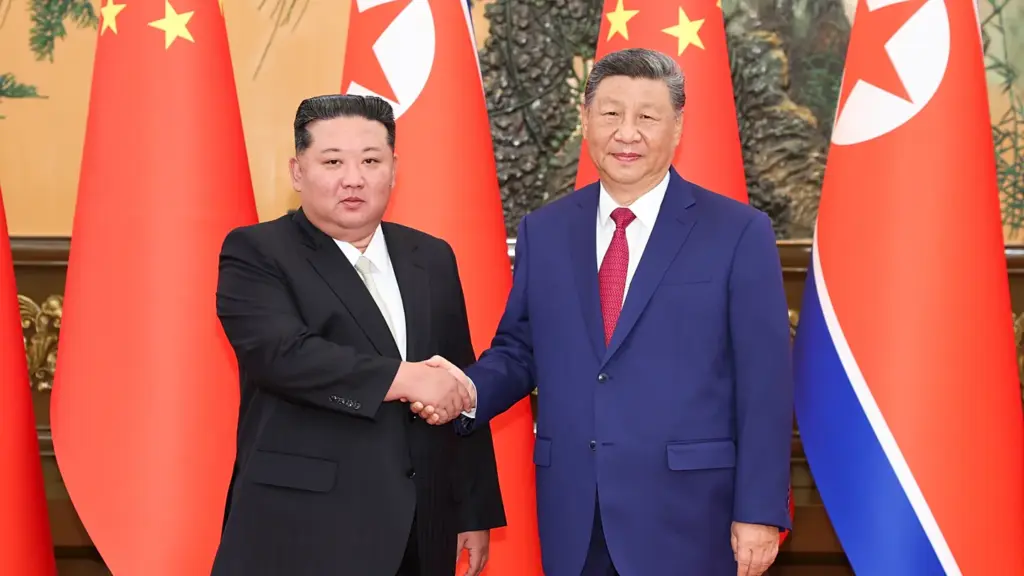
The streets of Pyongyang were transformed into a sea of red and gold this morning as Chinese President Xi Jinping touched down at Sunan International Airport, marking his first official visit to the Democratic People’s Republic of Korea (DPRK) in seven years. The arrival, characterized by a meticulously choreographed display of synchronized flag-waving and a 21-gun salute, serves as more than just a diplomatic formality; it is a profound statement of intent directed at both regional neighbors and Western powers.
Accompanying President Xi is a high-level delegation including top officials from the Communist Party’s Central Committee and key economic advisors. The visit comes at a juncture where the traditional alliances of the Cold War era are being reimagined through the lens of modern strategic competition. For Xi, the trip represents an opportunity to consolidate China’s role as the indispensable mediator on the Korean Peninsula. For Kim Jong Un, the presence of the Chinese leader provides a crucial layer of domestic legitimacy and a visible buffer against international isolation.
Analysis
The Seven-Year Itch: Why Now?
The seven-year hiatus since Xi’s last visit in 2019 was marked by the global pandemic, North Korea’s self-imposed border closures, and a deepening rift between Beijing and Washington. Diplomatic observers note that the timing of this 2026 summit is hardly accidental. With the international community grappling with the prolonged conflict in Eastern Europe and fluctuating tensions in the South China Sea, Beijing is keen to ensure its “backyard” remains stable and aligned with its broader security architecture.
The geopolitical landscape has shifted dramatically since 2019. In the intervening years, we’ve seen North Korea diversify its diplomatic portfolio, most notably through its deepening ties with Moscow. Beijing is now moving to reassert its position as Pyongyang’s primary patron and most influential partner.
Dr. Elena Vance · Senior Fellow, Institute for East Asian Strategic StudiesThe summit is expected to focus on three primary pillars: economic revitalization, regional security stability, and the formalization of a “New Era” of bilateral cooperation that adapts to the current sanctions environment.
Strategic Affairs
Navigating the Russia–North Korea–China Triangle
One of the most complex undercurrents of this visit is the evolving relationship between Pyongyang and Moscow. Over the past two years, North Korea has moved significantly closer to Russia, providing material support for the Kremlin’s efforts in Ukraine in exchange for advanced military technology and food security.
While Beijing has maintained a “no-limits” partnership with Russia, it remains wary of a Moscow-Pyongyang axis that could bypass Chinese influence or provoke an increased U.S. military presence in the Pacific. President Xi’s visit is seen by many as a “rebalancing act.” By engaging directly with Kim Jong Un, Xi is reminding the world—and the Kremlin—that any permanent solution for the Korean Peninsula must go through Beijing.
Internal documents from the Chinese Ministry of Foreign Affairs, echoed in state editorials, emphasize that the relationship between China and the DPRK is a “stabilizing force” in a “turbulent world.” This rhetoric aims to frame the summit as a peace-building mission, contrasting it with what Beijing describes as “confrontational bloc politics” led by the West.
Economics
Economic Cooperation and the Limits of Sanctions
Despite stringent United Nations Security Council sanctions, the economic bond between China and North Korea remains the DPRK’s literal lifeline. Trade between the two nations has seen a gradual recovery since the reopening of borders in late 2023, but the North Korean economy continues to face systemic challenges, including chronic food shortages and energy deficits.
The 2026 summit is expected to produce several memorandums of understanding (MOUs) focused on agricultural technology transfers, humanitarian aid, and cross-border infrastructure. There is also significant speculation regarding the “Green Silk Road” initiative—a subset of China’s Belt and Road Initiative—which could see Chinese investment in North Korean renewable energy projects, such as hydroelectric and solar power, which are often categorized under humanitarian or developmental exemptions.
However, Beijing must walk a fine line. As a permanent member of the UN Security Council, China officially adheres to the sanctions regime it helped draft. Yet, the enforcement of these sanctions has become increasingly porous. This visit likely signals a more overt “humanitarian-first” approach by Beijing, providing Pyongyang with the resources it needs to maintain stability without explicitly violating the letter of international law.
Security
The Nuclear Question and the Stalled Denuclearization Path
The elephant in the room remains North Korea’s nuclear program. Following the collapse of the Hanoi Summit years ago, the path toward denuclearization has largely been abandoned in favor of “strategic patience” from Washington and “relentless modernization” from Pyongyang.
During the welcoming banquet, President Xi reportedly praised North Korea’s “achievements in national development,” a phrase that analysts interpret as a tacit acknowledgment of Pyongyang’s status quo. While China continues to officially support the denuclearization of the Peninsula, its priorities have shifted toward preventing a regime collapse or a kinetic conflict that would send millions of refugees across its border.
For Kim Jong Un, the goal is “normalization” as a nuclear state. By securing a high-level visit from the leader of the world’s second-largest economy, Kim is demonstrating to his people and the world that North Korea can thrive as a nuclear-armed power with a powerful ally at its side.
Diplomatic Correspondent AnalysisInternational Reaction
The View from Washington and Seoul
In Washington and Seoul, the Xi-Kim summit is being monitored with a mixture of concern and pragmatic scrutiny. The U.S. State Department issued a brief statement ahead of the visit, urging China to use its influence to encourage Pyongyang to return to the negotiating table and refrain from further ballistic missile testing.
South Korea’s Ministry of Unification expressed hope that the visit would contribute to “substantive peace,” though privately, officials in Seoul worry that the tightening bond between Beijing and Pyongyang could further marginalize South Korea’s role in regional affairs. The burgeoning “Trilateral Cooperation” between the U.S., Japan, and South Korea is the Western response to this alignment, creating a polarized environment where communication channels are increasingly strained.
On the Ground
Humanitarian Perspectives and Civil Society
Beyond the high-level politics, the visit has a profound impact on the ground. For the citizens of Pyongyang, the visit brought a temporary reprieve from daily hardships. Reports from within the city describe festive decorations and an influx of consumer goods in state-run stores, timed to coincide with the arrival of the Chinese delegation.
We hope that this diplomatic opening translates into better access for nutritional programs and healthcare initiatives. The high-level talks are important, but the practicalities of food security for the North Korean population must be on the agenda.
Representative, International NGO operating in the regionOutlook
Looking Ahead: A New Status Quo?
As President Xi and Chairman Kim prepare for their second round of private talks at the Kumsusan Guest House, the implications of this visit are clear. The “seven-year gap” has been bridged, not by a return to the old ways, but by the forging of a new, more defiant alliance.
China is no longer merely North Korea’s “big brother”; it is a superpower using its relationship with Pyongyang to signal its global reach and its refusal to be constrained by Western diplomatic norms. Conversely, North Korea has proven its resilience, successfully navigating years of sanctions and a pandemic to emerge with its leadership intact and its primary alliance strengthened.
The joint communique expected at the conclusion of the visit will likely emphasize “eternal friendship” and “strategic coordination.” However, the true measure of the summit will be found in the months to come—in the frequency of trade convoys crossing the Yalu River, the tone of North Korea’s upcoming missile tests, and the degree of coordination between Beijing and Pyongyang at the United Nations.
In 2026, the world is witnessing a reconfiguration of power. President Xi’s presence in Pyongyang is a vivid reminder that the Korean Peninsula remains one of the most critical flashpoints in the world, and that the road to peace—or to a lasting stalemate—runs directly through Beijing.
As the Chinese delegation prepares for its departure tomorrow, the message to the international community is unmistakable: the partnership between the dragon and the hermit kingdom is not just enduring—it is evolving.