Minneapolis Tensions Escalate: Protests and Federal Investigations Shake the City

MINNEAPOLIS, MN — The Twin Cities remain in a state of high alert as civil unrest continues to ripple through the region. Tensions have reached a boiling point following the fatal shooting of 37-year-old Renee Nicole Good, a U.S. citizen, by a federal immigration agent on January 7, 2026. The situation has shifted from a local tragedy to a major federal-state confrontation, as the Department of Justice (DOJ) launches an investigation into Minnesota’s top leaders.
The Spark: The Killing of Renee Good
The unrest began after an Immigration and Customs Enforcement (ICE) agent, identified as Jonathan Ross, fatally shot Renee Good in south Minneapolis.
- The Incident: Video footage captured by bystanders shows federal agents approaching Good’s vehicle. As she attempted to drive away, Ross fired three shots into the SUV.
- Competing Narratives: The Department of Homeland Security (DHS) and President Trump have described the shooting as an act of “self-defense,” alleging Good used her vehicle as a weapon. However, Minneapolis Mayor Jacob Frey and Governor Tim Walz have vocally disputed this, calling the federal narrative “propaganda” and pointing to video evidence showing Good turning her wheels away from the agent.
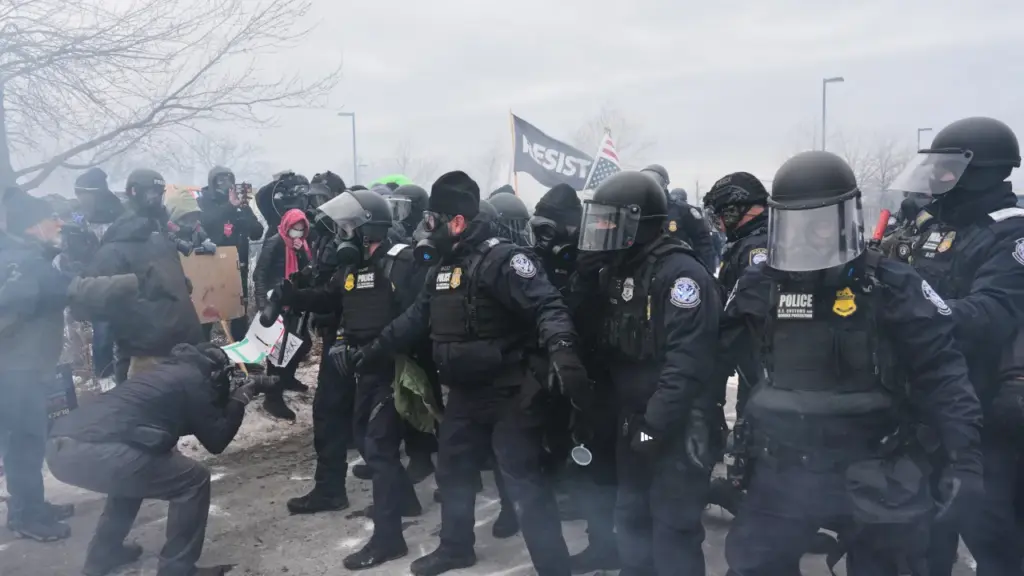
The tragedy was compounded on January 14, when a second federal agent shot and wounded a man during a targeted traffic stop in north Minneapolis, sparking further clashes between demonstrators and agents using smoke and crowd-control weapons.
DOJ Investigates Governor Walz and Mayor Frey
In an extraordinary escalation, the Department of Justice is reportedly investigating Governor Tim Walz and Mayor Jacob Frey for “obstructing federal immigration enforcement.”
- The Allegation: Sources indicate the probe centers on a possible conspiracy to impede the Trump administration’s “Operation Metro Surge”—a massive immigration crackdown involving roughly 3,000 federal agents in Minnesota.
- The Response: Mayor Frey has labeled the investigation an “obvious attempt to intimidate” local leaders for protecting residents. Governor Walz characterized the move as a “weaponization of the justice system” against political opponents.
Court Limits Federal Tactics
Amid the turmoil, a federal judge has stepped in to regulate the behavior of the thousands of agents deployed to the city.
- The Injunction: U.S. District Judge Kate Menendez issued an 83-page order prohibiting federal agents from arresting, tear-gassing, or using pepper spray against peaceful protesters and observers.
- Scope: The ruling explicitly protects individuals engaged in non-violent activity and observers who are simply recording the actions of law enforcement.
“This long ago stopped being a matter of immigration enforcement,” Governor Walz stated during a recent press conference. “Instead, it’s a campaign of organized brutality against the people of Minnesota.”
Impact on Daily Life
The massive federal presence has transformed Minneapolis into what local leaders describe as an “occupied” city.
- Volunteer Patrols: Residents have organized street patrols to monitor ICE activity and provide legal aid to those facing arrest.
- School Disruptions: Multiple school districts have faced closures or shifted to remote learning due to “fear and disruption” caused by the federal operations.
- Protests: “ICE Out” rallies have spread to all 50 states, but Minneapolis remains the epicenter, with daily vigils and marches through freezing conditions