American Infrastructure is Evolving The 2026 Smart City Initiative

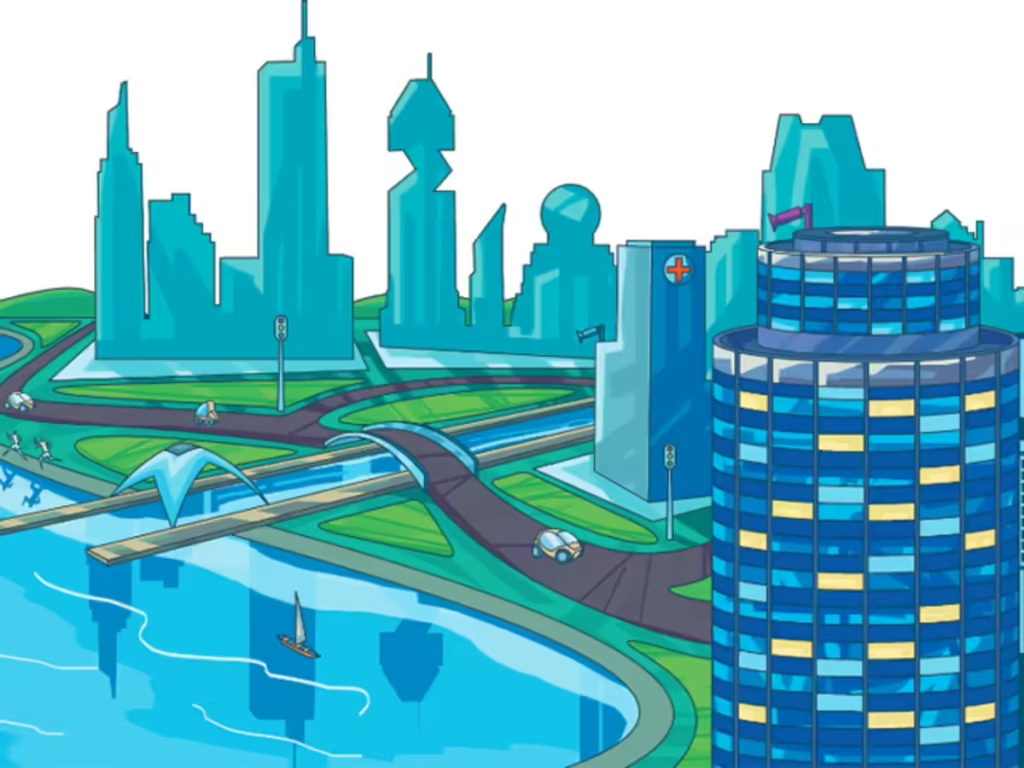
As we move through 2026, the blueprint of the American city is undergoing a radical transformation. No longer just a collection of roads and buildings, the modern U.S. metropolis is evolving into a “living” digital ecosystem. Driven by the 2026 Smart City Initiative, urban centers are integrating Artificial Intelligence (AI) and the Internet of Things (IoT) to solve age-old problems: congestion, carbon emissions, and inefficient public services.
AI-Driven Traffic: Austin, Columbus, and Phoenix Lead the Way
The most visible changes are happening at the intersection—literally. Cities like Austin, Texas, Columbus, Ohio, and Phoenix, Arizona have moved beyond pilot programs to full-scale AI implementation in traffic management.
- Austin, TX: The city has deployed an “AI-native” infrastructure that treats traffic signals as a coordinated network rather than isolated timers. By using computer vision and edge computing, Austin’s system can detect traffic surges in real-time, reducing idle times at red lights by up to 25%.
- Columbus, OH: Building on its “Smart Columbus” legacy, the city is using predictive analytics to simulate traffic impacts of major events before they happen. This “Digital Twin” technology allows planners to reroute traffic proactively, significantly cutting down on the “stop-and-go” driving that accounts for a large portion of urban CO2 emissions.
- Phoenix, AZ: In one of the hottest climates in the U.S., Phoenix is integrating AI with environmental sensors. The system prioritizes the flow of public transit and electric vehicles (EVs) while managing “heat island” effects by optimizing traffic patterns to reduce the density of idling internal combustion engines.
Federal Support and Non-Partisan Growth
A key driver of this evolution is the Bipartisan Infrastructure Law, which continues to provide “once-in-a-generation” funding through 2026. These initiatives are largely non-partisan, focusing on the universal goals of safety, economic competitiveness, and efficiency.
Programs like the Carbon Reduction Program (CRP) and Advanced Digital Construction Management Systems (ADCMS) are funneling billions into local governments. This federal support allows transit agencies to:
- Electrify Fleets: Moving toward Zero-Emission Buses (ZEBs) to meet climate goals.
- Modernize Signaling: Replacing 20th-century analog systems with cloud-based, “vehicle-to-everything” (V2X) connectivity.
- Bridge the Digital Divide: Providing free public Wi-Fi on transit systems in cities like Charlotte and Kansas City to ensure smart city benefits reach all residents.
The Impact: Greener, Faster, Safer
The data for 2026 suggests that these “Smart City” upgrades are doing more than just saving time. Early reports indicate that AI-optimized traffic flow can reduce vehicular emissions by 12% to 20% without requiring a single new road to be built. Furthermore, by reducing human error—which accounts for over 90% of traffic accidents—connected infrastructure is making American streets safer for pedestrians and drivers alike.
As infrastructure becomes more modular and “interoperable,” the American city is no longer just a place to live; it is becoming a partner in a more sustainable, efficient future.