Historic EU-Mercosur Trade Deal Signed After 25-Year Standoff

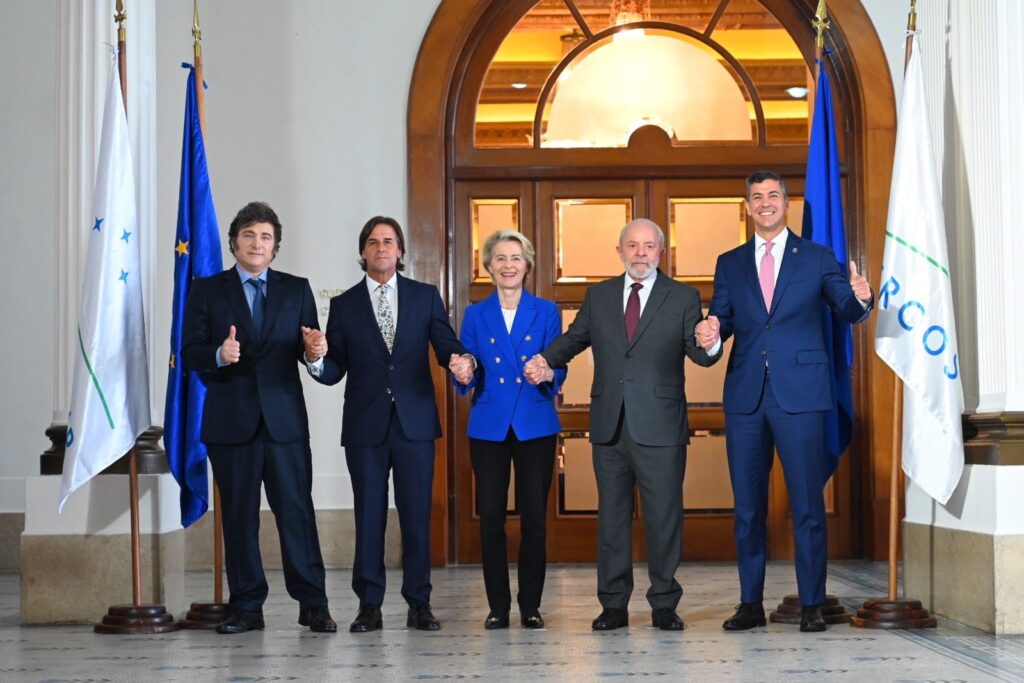
ASUNCIÓN, Paraguay — In a definitive shift for global commerce, the European Union and the Mercosur bloc—comprising Argentina, Brazil, Paraguay, and Uruguay—formally signed a landmark free trade agreement this weekend. The ceremony, held on January 17, 2026, concludes more than a quarter-century of complex negotiations. The pact establishes one of the largest free trade zones in history, linking over 700 million consumers and a combined GDP of approximately $22 trillion.
Creating a Transatlantic Economic Powerhouse
The agreement is designed to dismantle long-standing trade barriers, eliminating tariffs on more than 90% of goods exchanged between the two regions. For European industries, the deal opens highly protected South American markets, particularly for automotive, machinery, and pharmaceutical sectors, which previously faced tariffs as high as 35%.
Conversely, Mercosur nations gain significantly expanded access to the European market for agricultural commodities. Products such as beef, poultry, sugar, and ethanol will benefit from new or increased duty-free quotas. Beyond physical goods, the treaty includes provisions to liberalize services and public procurement, allowing European firms to bid for government contracts in South America on an equal footing with local companies for the first time.
Key Sectors Impacted by the Agreement
- Automotive & Machinery: EU exports are expected to surge as 35% tariffs are phased out.
- Agriculture: Mercosur gains a 99,000-tonne quota for beef at a preferential 7.5% tariff.
- Dairy & Wine: European producers of high-value items like cheese and spirits will see immediate tariff reductions.
- Critical Minerals: The EU secures predictable access to lithium and nickel essential for the green energy transition.
Navigating Domestic Resistance and Environmental Safeguards
Despite the historic nature of the signing, the deal remains a point of intense domestic friction. In Europe, farmer-led protests have erupted across France, Ireland, and Poland, with producers fearing an influx of cheaper South American goods that may not adhere to the same stringent environmental and sanitary standards.
To address these concerns, the final text includes “rebalancing” mechanisms. These safeguards allow for the temporary suspension of tariff preferences if a sudden surge in imports causes “serious injury” to domestic sectors. Additionally, the agreement ties trade benefits to commitments under the Paris Climate Agreement, though critics remain vocal about the potential for increased deforestation in the Amazon and Cerrado biomes to meet rising agricultural demand.
Why This Matters: The New Geopolitical Calculus
The timing of this agreement is not accidental. As traditional trade routes face disruption and major global powers move toward protectionism, the EU is aggressively diversifying its supply chains. By locking in a deal with Mercosur, Europe reduces its reliance on Chinese manufacturing and creates a strategic alternative to fluctuating U.S. trade policies.
For South America, this treaty is a vital step toward modernizing its industrial base. The influx of European machinery and technology is expected to boost productivity, while the removal of export taxes on minerals like lithium positions countries like Argentina and Brazil as central players in the global electric vehicle supply chain.
Summary: The EU-Mercosur trade deal represents a tectonic shift in global economics, promising trillions in potential growth while testing the environmental and agricultural resilience of both continents.