Federal Court Curbing ICE Tactics Amid Minnesota Standoff

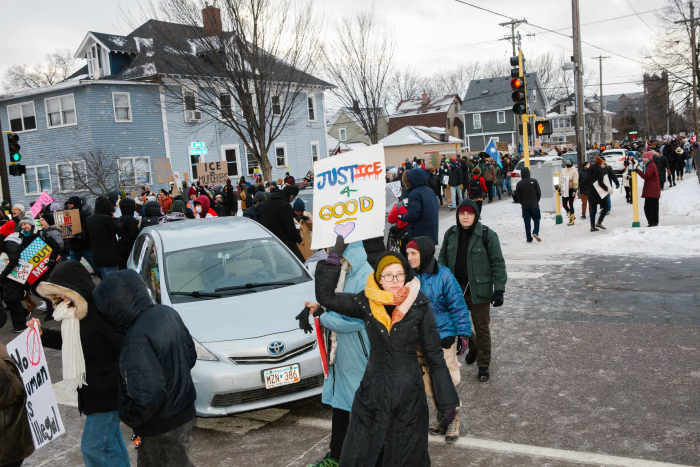
MINNEAPOLIS — A federal judge has issued an emergency injunction to restrict the methods used by Immigration and Customs Enforcement (ICE) agents in the Twin Cities following weeks of escalating violence and civil unrest. The ruling, delivered by U.S. District Judge Katherine Menendez, prohibits federal officers from detaining or using chemical irritants against peaceful protesters who are not obstructing law enforcement. The decision comes as the White House warns of severe “consequences” for Minnesota’s continued sanctuary status, marking a significant legal and political escalation in the national immigration debate.
Judicial Intervention in “Operation Metro Surge”
The court’s intervention follows the launch of Operation Metro Surge, an expansive federal initiative that has deployed more than 2,000 agents to the Minneapolis-St. Paul region. Tensions reached a breaking point after the fatal January 7 shooting of Renee Good, a 37-year-old mother, by a federal agent during an enforcement action.
Judge Menendez’s 83-page order specifically bars agents from:
- Using pepper spray or tear gas on non-violent observers.
- Conducting suspicionless stops of vehicles following ICE convoys.
- Detaining individuals without probable cause of a crime.
The judge noted that video evidence suggested some past arrests were likely “punishment” for constitutionally protected protest activity rather than legitimate law enforcement needs.
Federal and State Leadership in Direct Conflict
The legal battle has created a rare and public rift between state and federal authorities. Minnesota Attorney General Keith Ellison, alongside the mayors of Minneapolis and St. Paul, filed a separate lawsuit alleging that the federal surge violates the Tenth Amendment and creates “organized brutality” against residents.
In response, the Department of Justice (DOJ) has confirmed it is investigating Governor Tim Walz and Minneapolis Mayor Jacob Frey for allegedly impeding federal officers. A White House statement released Friday characterized the state’s stance as “defiance over partnership,” suggesting that “sanctuary” policies have directly fostered the current climate of hostility.
Why This Matters: A New Era of Federal Enforcement
This standoff is more than a local dispute; it represents a fundamental test of state vs. federal sovereignty in 2026. Unlike previous immigration enforcement efforts, the current administration is utilizing a “militarized” approach in urban centers that actively resist federal policy.
The outcome of these legal challenges will likely set the precedent for:
- Funding Autonomy: Whether the executive branch can legally withhold federal payments to states based on their level of immigration cooperation.
- Civil Liberties in Enforcement Zones: Defining the limits of the First and Fourth Amendments when federal agents operate in high-tension domestic environments.
Future Implications
If the courts ultimately side with the federal government, we may see the expansion of similar “Surge” operations into other sanctuary jurisdictions like Chicago or Los Angeles. Conversely, if Minnesota’s lawsuit succeeds, it could bolster the legal framework for states to refuse participation in federal mandates they deem harmful to public safety.